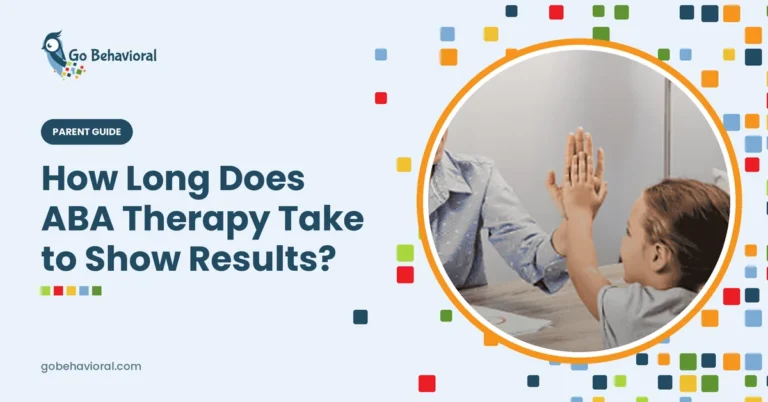

An ABA therapy session is a planned block of time where a trained therapist works with your child on clear, measurable goals. Most sessions last two to four hours. They mix play with short teaching tasks, and the therapist rewards each step forward. Every response is written down so the team can see what is working.
Many parents picture a strict classroom or a clinic exam room. A good session looks more like guided play with a purpose. At Go Behavioral LLC, each session follows a plan written by a Board Certified Behavior Analyst (BCBA). A Registered Behavior Technician (RBT) carries out that plan with your child. This guide shows you what happens from the moment your therapist arrives to the moment the session ends.
The Short Answer
A typical applied behavior analysis (ABA) session includes these parts:
- Pairing: The therapist builds trust by joining your child in activities they enjoy.
- Structured teaching: Short, repeated practice on target skills such as asking for help or naming objects.
- Natural teaching: The same skills practiced during play, snack time, and daily routines.
- Positive reinforcement: Praise, toys, or activities given right after a correct response.
- Data collection: The therapist records responses, prompts, and behaviors throughout.
- Parent update: A quick summary of the session at the end.
How a Typical ABA Session Flows
No two sessions are exactly alike. Still, most follow the same basic order. Your child’s goals, age, and energy level shape how much time each part takes.
- Session prep. Before your child arrives, the therapist reviews the treatment plan and notes from the last session. Materials, rewards, and data sheets are set out.
- Pairing and rapport. The first minutes are spent on fun. The therapist plays, sings, or builds blocks with your child. This teaches your child that the therapist is someone good to be around.
- Preference check. The therapist offers a few choices to see what your child wants most today. That item becomes the reward for hard work.
- Structured teaching. Short rounds of practice target specific skills. Each round may take only a few seconds.
- Breaks and natural practice. Play, snack, and movement breaks give your child a reset. The therapist still teaches during these times, just in a more relaxed way.
- Daily living skills. Many sessions include handwashing, toileting, or dressing practice when those are part of the plan.
- Wrap up. The session ends on a positive activity. The therapist then shares highlights with you.
Sample Three Hour Session Schedule
The table below shows one example for a preschool child working on communication and play skills.
| Time | Activity | Skills Practiced |
|---|---|---|
| 9:00 to 9:15 | Pairing and free play | Trust, shared attention |
| 9:15 to 9:45 | Table work | Matching, following directions, naming items |
| 9:45 to 10:00 | Movement break | Turn taking, requesting |
| 10:00 to 10:20 | Snack time | Asking for items, waiting, using utensils |
| 10:20 to 10:50 | Play based learning | Pretend play, imitation, sharing |
| 10:50 to 11:10 | Daily living routine | Handwashing, toileting |
| 11:10 to 11:30 | Social game and closing | Greetings, calm transitions |
Teaching Methods Used During a Session
ABA uses proven methods to teach new skills and lower behaviors that get in the way of learning. Your child’s BCBA picks the methods that fit your child best. You can read more about these approaches in our guide to intervention strategies for autism.
| Method | What It Looks Like in a Session |
|---|---|
| Discrete Trial Training (DTT) | The therapist gives a short instruction, your child responds, and a reward follows. This repeats several times. |
| Natural Environment Teaching (NET) | Skills are taught during play and routines, such as asking for a ball during a game. |
| Prompting and fading | The therapist gives a hint, like pointing or modeling, then slowly removes it. |
| Positive reinforcement | Your child earns praise, a favorite toy, or a fun activity right after a target behavior. |
| Functional Communication Training (FCT) | Your child learns a word, sign, or picture to replace a problem behavior. |
| Task analysis and chaining | A big task, like brushing teeth, is broken into small steps taught one at a time. |
Who Is in the Room
Most sessions are one on one. The RBT works directly with your child for the full session. The BCBA designs the program, visits sessions to supervise, and updates goals as your child grows. Our article on BCBA vs RBT vs BCaBA explains each role in detail.
How Data Is Collected
Data is the backbone of ABA. During each session, the therapist tracks:
- How many times your child answers correctly
- How much help, or prompting, was needed
- How often a challenging behavior happens and how long it lasts
- What happened right before and after a behavior
The BCBA reviews these numbers every week. If a skill is not improving, the plan changes. This keeps therapy focused on real progress, not guesswork.
Your Role as a Parent
Parents are part of the team. You may watch sessions, join activities, or practice skills with the therapist. Many plans also include parent training, where the BCBA coaches you on using the same strategies at home. Skills grow faster when your child practices them in more than one place.
What Happens in the First ABA Session
The first few sessions look different from later ones. Before therapy starts, the BCBA completes an assessment and writes a treatment plan with you. Once sessions begin, the early focus is on pairing. Your child may spend most of the first week simply playing with the therapist. This is on purpose. A child who trusts the therapist learns faster and with less stress.
If you are still deciding whether ABA fits your family, our guide on who needs ABA therapy can help. You can also review the benefits of ABA for your child.
In Home vs Clinic Sessions
Sessions can take place at home, in a clinic, or at school. Each setting has strengths.
| Setting | Best For |
|---|---|
| In home | Daily routines, toileting, sleep, sibling play, and family involvement |
| Clinic | Peer interaction, fewer distractions, and access to group activities |
| School | Classroom behavior, following group directions, and transitions |
Your BCBA will suggest a setting based on your child’s goals. Some children use a mix of settings over time. For help comparing providers and formats, see how to choose the right behavioral program for your child.
How to Prepare Your Child for Sessions
A little planning helps sessions run smoothly.
- Keep a routine. Schedule sessions at the same time each day when possible.
- Share favorites. Tell the therapist about toys, shows, and snacks your child loves.
- Clear a space. For home sessions, choose a quiet area with few distractions.
- Plan for rest. Make sure your child is fed and rested before the session.
- Ask questions. Request regular updates on goals and data.
Cost and insurance also shape how often sessions happen. Our breakdown of ABA therapy cost explains what families usually pay.
Frequently Asked Questions
How long is a typical ABA therapy session?
Most ABA sessions last two to four hours. Younger children or children in focused programs may have shorter sessions. The BCBA sets the length based on your child’s goals and attention span.
Do parents stay during ABA sessions?
Parents can usually watch or join part of a session, especially at home. Some children focus better when parents step away for a while. Your BCBA will tell you what works best for your child.
Is ABA therapy just play?
Play is a big part of ABA, but it always has a purpose. The therapist uses play to teach communication, social, and daily living skills. Every activity links back to a written goal.
What happens if my child has a meltdown during a session?
The therapist follows a behavior plan written for your child. They keep your child safe, stay calm, and help your child return to learning. They also record what led to the meltdown so the plan can improve.
How often does the BCBA attend sessions?
The BCBA visits sessions on a regular schedule to supervise the RBT and check progress. They also meet with parents to review data and update goals. How often depends on your child’s plan and insurance rules.
Can ABA sessions happen at school?
Yes. Many providers offer school based support when the school agrees. The therapist helps your child use skills like following directions and joining group work in the classroom.
Start ABA Sessions With Confidence
A good ABA session is warm, structured, and built around your child. You should always know what your child is working on and how they are doing. If you have questions about sessions, schedules, or getting started, the team at Go Behavioral LLC is ready to help your family take the next step.